
Sprouted Einkorn Sourdough Bread
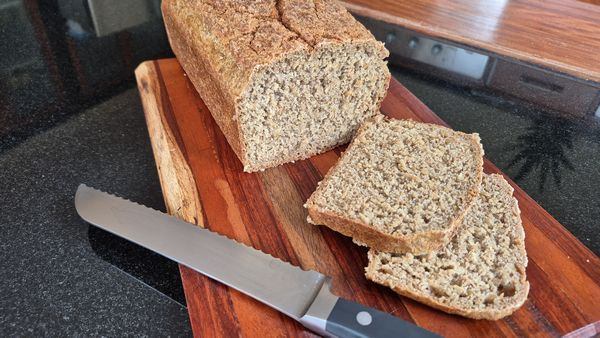
This is an amazing, healthy, and easy-to-make bread. Made from sprouted whole einkorn grains, sourdough starter, and salt—just three ingredients, with no oil or kneading. Although the process takes several days, you spend most of that time waiting. The actual hands-on preparation is surprisingly simple. But it does take patience because it is a multi-day process. We sprout einkorn, mix it with sourdough starter and salt, and let it rise for many hours before baking it for about 90 minutes. The result is a very tasty, nutritious, high-protein bread.
Ingredients
700 g (about 1½ lb) dry einkorn berries
180 g (about ¾ cup) active sourdough starter
10 g (about 2 tsp) salt
Preparation
Equipment:
Food processor
Two 9 × 5-inch loaf pans (The second pan is for creating a simulated "Dutch" oven)
Parchment paper
Kitchen scale
Teaspoon
Spatula
Step-by-Step Instructions
Soak the Einkorn
Soak 700g of dry einkorn berries in water at 68–75°F (20–24°C) degrees for 6-12 hours. Make sure the berries remain covered.
Sprout the Einkorn
Drain thoroughly and place them in a bowl or colander. Avoid dense areas of berries to prevent heat building up.
Rinse and drain every 8 to 12 hours.
Stop as soon as you see a tiny 1–2 mm white tip peeking out from most of the grains. This can take up to two days.
Drain the sprouted grains into a fine-mesh strainer.
Let them sit for a few minutes to ensure all surface water is gone.
Blend the Ingredients
Place the starter in the food processor.
Add the drained berries into your food processor.
Add the salt
Blend for 1 minute
Scrape down the sides and blend for another minute.
If it still looks lumpy, blend for another minute. It should form a thick, uniform paste (like thick oatmeal or wet clay). The finished mash should be cohesive but still soft enough to spread with a spatula. Be careful not to let the processor heat up the dough. Ideal temperature is 74°F – 78°F / 23°C – 26°C. Cooler rising will take longer, and hotter rising increases the risk of collapse.
Pan and Ferment
Line your loaf pan with parchment paper.
Use a silicone spatula or wet hands to scoop the sticky mash into the pan.
Smooth the top of the loaf with wet fingers or the spatula.
Cover the pan with a cloth to prevent it from drying out.
Allow the dough to ferment at approximately 74–78°F (23–26°C). Depending on your starter's strength and room temperature, this may take 4–8 hours. The loaf is ready to bake when the surface domes slightly, small bubbles appear, and the volume has increased by about 20–30%. Do not wait for it to double.
Bake
Preheat your oven to 218°C (425°F) during the last 30 minutes of rising.
Place the second loaf pan upside down on your ready-to-bake loaf.
Bake initially for 30 minutes. Remove the cover pan and reduce the temperature to 350°F (177°C) and bake for another 40-60 minutes until the crust is dark brown. If you have a probe thermometer, check the center of the loaf. It should register between 205–210°F (96–99°C) to ensure the wet interior is fully cooked.
Cool and Rest
Transfer the loaf to a wire cooling rack and remove the parchment paper.
Do not cut the bread until fully cooled, preferably overnight.
Additional Tips
Sprouting: The short sprouting period is important because longer germination increases enzymatic activity, particularly amylase, which breaks down starch. Excessive amylase activity can produce a sticky, gummy interior that remains difficult to correct even with extended baking. Stop sprouting when most grains show the first tiny white root tip. Longer sprouts are not better for breadmaking.
Depending on your food processor's capacity, you may need to blend the ingredients in two batches. Combine them thoroughly before transferring the mash into the loaf pan.
The 4–8-hour fermentation range is a starting estimate. Judge by the actual risen appearance. Temperature and sourdough concentration will affect the timing. Your own baking results should determine the final recommendation.
Because this bread is made from freshly sprouted, moist grains rather than dry flour, it contains a lot of water. The longer baking time lets the interior cook thoroughly while preventing the crust from becoming excessively dark.
If the loaf is still gummy after fully cooling, it may be underbaked or have excessive enzymatic activity from sprouting. It still makes great toast but may take more patience to slice.
Store in the refrigerator.

Recipe by
Lester Karplus
Posted October 23, 2026